An autonomous revenue workflow in banking connects an identified customer opportunity to the work required to complete it. AI agents coordinate outreach, qualification, documents, approval routing, system updates and monitoring. The bank defines what those agents may do, owns the customer relationship and retains credit and approval decisions.
What is an autonomous revenue workflow?
A revenue opportunity is a hypothesis: a particular customer may need a particular banking service at a particular moment. A workflow tests that hypothesis and, when there is a fit, moves it toward a completed outcome. That outcome might be an expanded credit facility, a new treasury service or a deeper deposit relationship.
“Autonomous” describes how authorized tasks progress between checkpoints. It does not mean every decision becomes automatic. A document request might proceed without someone composing an email, while a pricing exception waits for an authorized banker. The useful distinction is which actions can proceed, under what conditions, and when a person must intervene.
For a relationship manager, the practical benefit is continuity. Customer replies, missing information and outstanding decisions should remain connected to the same case. Automation has limited value if a banker still has to reconstruct the history before every next step.
What does the workflow need to start?
Begin with an opportunity brief that another person can understand without searching across systems. It should contain:
- The customer: the correct legal entity, relationship owner and appropriate contact.
- The possible need: the product or service worth discussing, expressed as a hypothesis.
- The evidence: relevant records, their sources and the dates they were observed.
- The next action: an owner, a clear task and a reasonable deadline.
- The boundaries: permissions, required reviews and conditions that should pause the case.
Consider a fictional business whose credit usage has risen and that has announced a new distribution contract. Those signals can justify a conversation about working capital. They do not establish financing demand, repayment capacity or approval. The workflow must verify those points instead of treating the initial signal as a decision.
When the evidence is incomplete, research or human review can be the first action. Starting customer outreach too early can waste attention and weaken trust.
What are the six workflow steps?
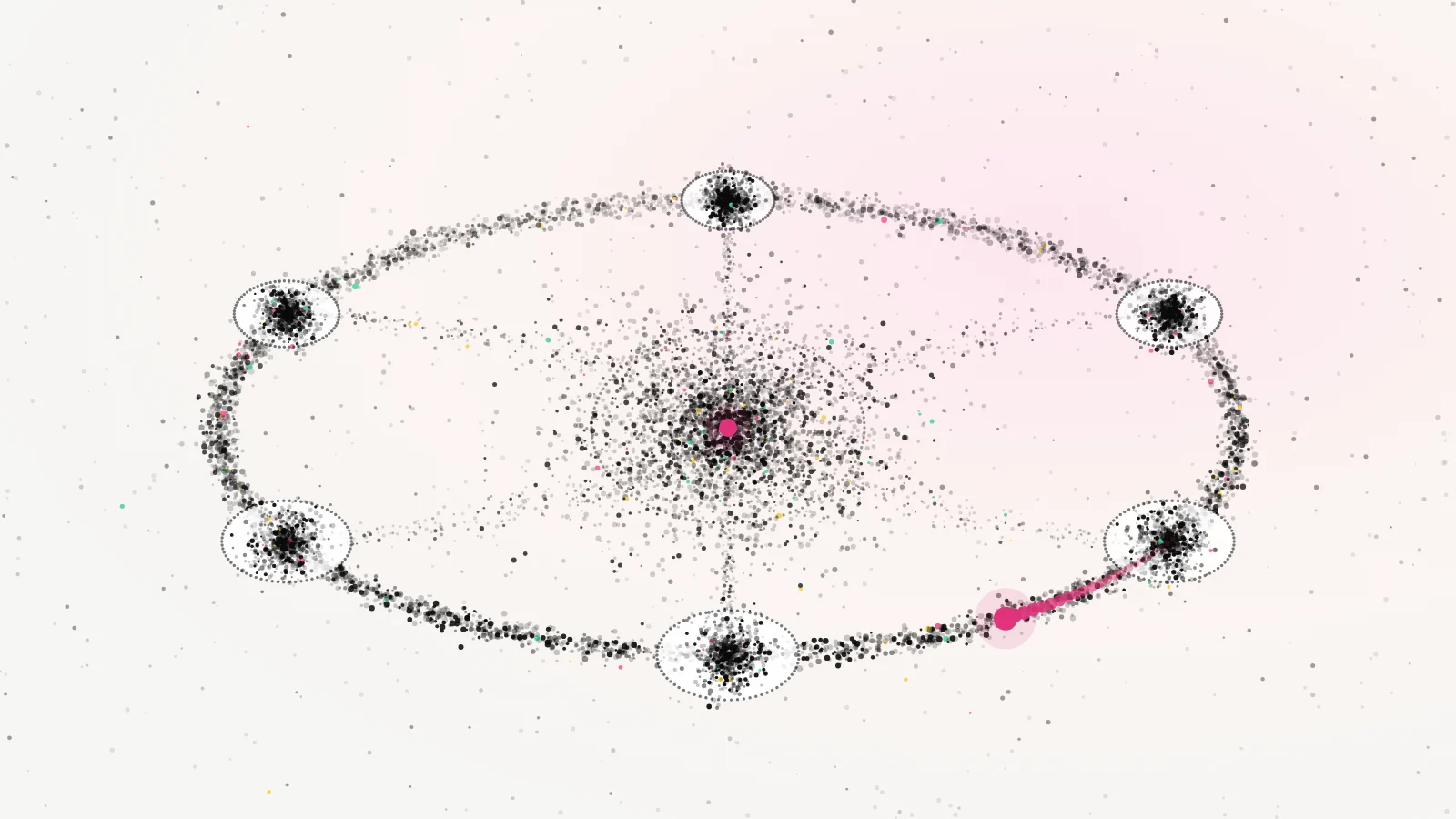
FORFI describes revenue execution through six connected stages. Each stage needs a defined output and a rule for what happens when that output cannot be produced. A case may move backward for clarification, pause or close without a sale.
1. Outreach: establish whether the need is real
The outreach stage turns internal context into a relevant customer conversation. The message should explain a plausible reason to connect, use an approved channel and respect the relationship manager's knowledge of recent conversations. It should avoid presenting an inferred need as something the customer has already confirmed.
For the fictional distributor, the first message could invite a discussion about financing the timing gap between buying inventory and collecting customer payments. The goal is to learn whether that gap exists, how the business currently handles it and whether a conversation is welcome.
Completion condition: a response or a documented disposition, such as no current need, contact later or unreachable. Follow-up limits and customer preferences should prevent repeated messages from becoming the default response to silence.
2. Qualification: check the opportunity against reality
Qualification connects the customer's stated objective with the bank's product criteria. Relevant questions include the intended use, timing, requested scope and existing arrangements. A credit expansion and a treasury service require different questions, so a generic questionnaire will rarely serve both well.
An agent can collect answers, identify missing fields and organize supporting information. The bank determines the criteria and how uncertain or conflicting answers are reviewed. A customer's interest in a product should remain distinct from eligibility and formal approval.
Completion condition: enough verified information to proceed, a named reviewer for unresolved questions, or a recorded reason to stop. Capturing why opportunities fail qualification also helps the team improve its original signals.
3. Documents: assemble a usable case
The document stage requests the records required for the specific product and customer situation. It tracks what has arrived, what is missing and what needs clarification. For a lending conversation, the bank might request financial information and supporting business records according to its own process.
Receiving a file is different from establishing that it is usable. The workflow should identify the relevant entity, reporting period and document version, then route discrepancies for review. A readable upload can still contain outdated information or refer to the wrong company.
Completion condition: a package that meets the bank's completeness checks, with unresolved issues clearly identified. Customers should receive specific requests for missing items instead of being asked repeatedly to submit the entire package.
4. Approvals: put the case in front of the right people
An approval stage prepares and routes the case to authorized decision makers. Its value comes from making the evidence, open questions and requested decision easy to understand. The reviewer should be able to inspect the underlying information rather than relying only on an AI-generated summary.
The bank remains responsible for credit judgment, product approval and exceptions. An approval agent can coordinate the process without holding the authority to approve. Requests for additional information should return to a named owner with the reviewer's reason attached.
Completion condition: an authorized decision and its conditions are recorded. Conditional approval should not be represented as a completed transaction. Any remaining requirements must continue through the workflow before the bank records the final outcome.
5. System updates: make progress visible and reliable
Customer commitments, decisions and completed tasks need to reach the appropriate systems of record. Otherwise, the next employee sees an outdated pipeline even though work has progressed elsewhere. Updates should preserve the connection between the customer, the opportunity and the evidence behind a change.
Design this stage for failures as well as successful writes. If a connection times out, the workflow should distinguish an unconfirmed update from a confirmed failure. Retrying without that distinction can create duplicate activities or conflicting records.
Completion condition: the required update is confirmed or an exception has an owner. A message saying “task completed” is insufficient when the destination system still shows the previous state.
6. Monitoring: learn from the outcome and changing needs
Monitoring checks whether the agreed outcome occurred and whether the relationship later presents a relevant reason to reconnect. Booking a facility, activating a service and recording recognized revenue are different events. The bank should define which event completes the case and which outcomes require later measurement.
New information may create another opportunity, change the priority of an existing one or show that outreach should stop. Monitoring therefore needs both repeatable triggers and suppression rules. It should not restart a closed conversation merely because the same unchanged signal appears again.
Completion condition: a recorded outcome and a defined next review or monitoring state. Lessons from declined, delayed and completed cases can inform future qualification and outreach.
How does a case move between stages?
Return to the fictional distributor. The customer confirms that the new contract creates a funding need, but the start date remains uncertain. Qualification records that uncertainty. The document request focuses on the information the bank needs to evaluate the proposed facility, including the confirmed contract terms when available.
If the package arrives incomplete, the case stays in the document stage with a specific request assigned. If a reviewer later asks for clarification, the workflow routes that question back without discarding the work already completed. The relationship manager can see why the case is waiting and explain the next step to the customer.
After an authorized decision, any remaining conditions stay visible until satisfied. System updates then reflect the actual status, and monitoring follows the bank's chosen completion event. This sequence makes a crucial requirement concrete: every stage must preserve context, including unresolved questions. Passing a case forward should never make an uncertainty disappear from view.
What stays with the bank?
The bank sets product policy, approves permitted actions, manages the relationship and assigns decision authority. A practical operating model makes those responsibilities visible at each stage. It specifies who can change a workflow, who reviews exceptions and who can pause execution.
Before enabling an agent, define its access to records and its ability to send messages or change systems. Separate the permission to read information from the permission to act on it. Require review at the points where an incorrect action would have a meaningful customer or business impact.
These are operational design recommendations. The voluntary NIST AI Risk Management Framework provides a broader reference for considering trustworthiness throughout the design, use and evaluation of AI systems. Applying a framework still requires choices tailored to the bank's use case.
A useful review record shows the source information, the action taken, the time and the responsible person or agent. If two systems disagree or a customer disputes a detail, the case should pause for resolution. Escalation is a normal workflow outcome, not a reason to hide the case from the queue.
How should a bank pilot and measure the workflow?
Start with one repeatable use case and a defined customer group. Existing customers with a possible need for credit expansion may be a candidate, provided the required records and bank owners are available. Document today's process before changing it: where cases wait, which steps require rework and what completion means.
Test representative cases before expanding activity. Include missing documents, an incorrect contact, a customer who declines and a failed system update. These cases reveal whether the workflow can recover or stop appropriately. Review the proposed actions with the people who will own the live queue.
Use a measurement plan that connects activity to outcomes:
- Progress: count contacted, qualified, submitted, approved and completed opportunities using consistent definitions.
- Time: measure elapsed time and time waiting at each stage, so the team can locate delays.
- Quality: track incomplete submissions, corrected updates, escalations and customer feedback.
- Value: distinguish pipeline estimates, booked business, recognized revenue and the cost of execution.
Compare equivalent customer groups and observation periods where practical. A workflow can receive credit for work that would have happened anyway, so raw bookings alone do not establish incremental revenue. A phased rollout or suitable comparison group can make the result easier to interpret.
Include the effort required to operate the workflow in the pilot review. Someone must maintain product criteria, resolve exceptions and check the quality of customer communications. Record that work alongside time saved on routine tasks. A process that shifts effort into a hidden review queue may look faster without improving the team's capacity.
Agree on expansion criteria before launch. These might include reliable system updates, acceptable submission quality, manageable exception volume and a clear account of commercial outcomes. The bank should choose the thresholds for its own process, then use the same criteria when deciding whether to broaden deployment.
FORFI brings opportunity identification and coordinated follow-through into the same revenue execution approach. In a demo, use a representative case and examine each handoff, including the exceptions. To explore the inputs to that process, read why bank data rarely becomes revenue.
Frequently asked questions
How does a revenue workflow differ from a banking chatbot?
A chatbot provides a conversational interface and may connect to tools. A revenue workflow defines how a case progresses across tasks, records, owners and decisions. A chatbot can participate in that workflow, but conversation alone does not provide the completion rules or operational ownership.
Can an AI agent approve a bank loan?
In the workflow described here, the bank retains credit and approval decisions. The agent collects information, prepares the case, routes it and tracks the response. Any separate automated decision process would need its own bank-defined authority and controls.
Does every stage need to be automated at launch?
No. Begin with stages whose inputs, outputs and review requirements are clear. Keep human handling for unresolved decisions and exceptions. Expand only after the team can inspect outcomes and show that the workflow reliably completes its assigned tasks.